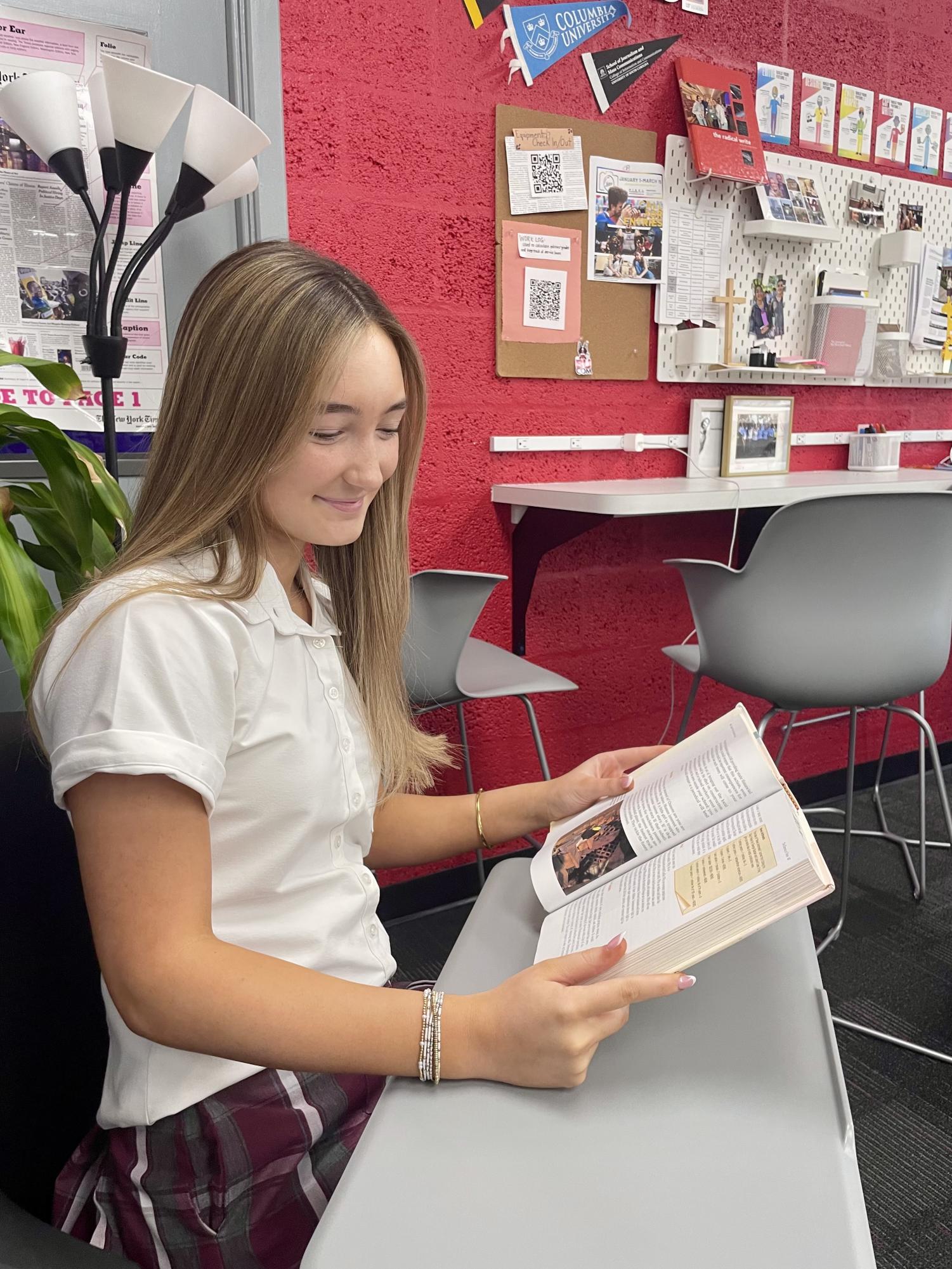
While some students find it easy to get lost in the pages of a book, others may find reading to be a daunting task. Many teachers claim that reading outside of the classroom as an extracurricular activity is beneficial for students, but is it really?
Reading outside of the classroom stimulates the mind and can help students with their academic achievement and language development, according to matherhospital.org.
Learning about the benefits of reading for pleasure is important today because the amount of youth reading in their free time has rapidly declined. Only 42% of nine-year-olds reported reading for pleasure in 2000, and only 17% of thirteen-year-olds in 2000 reported reading for pleasure, according to the National Assessment of Educational Progress. These numbers are significantly lower than the 53% of nine-year-olds who reported reading for pleasure and the 35% of thirteen-year-olds who did in 1984.
Studies show that reading for pleasure is linked to fewer mental health problems, better sleep and improved cognitive performance, according to psychologytoday.com.
“Reading for pleasure is beneficial to anyone, not just students,” AP English Literature & Composition teacher Amanda Ferrari said.
Reading is better for the brain than other pastimes, like scrolling on a phone or watching television.
“When I’m done reading, I feel more productive than if I [had] spent that time on my phone,” senior Sarah Stanley said.
Reading serves as a significant way to alleviate stress. It can also enhance emotional intelligence, ultimately aiding children who read to navigate the world around them as they grow, according readingpartners.org
“Reading for pleasure builds mental endurance,” Ferrari said. “It trains students to focus on one task for an extended period of time, which has become harder in a world built around instant gratification and constant notifications.”
Reading can also expose individuals to new ideas, cultures and experiences that go beyond their own, which fosters empathy and better social understanding.
“It’s helped me read better and have better vocabulary and comprehension,” senior Hank Mayfield said.
Many students may not feel compelled to read in the same way others do for numerous reasons. Often, students may find reading to be overwhelming or a boring task rather than a fun pastime.
“I can never concentrate, and the books never make sense to me,” senior Rylie Muldoon said.
People who don’t like to read may feel that way because they have never been able to truly enjoy a good book, or because they associate it with tasks and assignments due to the fact that they are required to read for school.
“I think that [under the right circumstances], I would [enjoy it], because I have read before and it’s fun,” Muldoon said.
Reading can be very powerful when you find a book that you connect with. It can help you better understand the people around you.
“When you immerse yourself in a genre or topic that genuinely speaks to you, you redefine what reading means,” Ferrari said. “You reconnect reading with enjoyment rather than tying it to grades, assignments, or a single outcome.”
Next time you are bored and looking for a new healthy hobby, try picking up a book and try reading.
“Pick something you are genuinely interested in and jump in…” Ferrari said. “Even five minutes a day is a win. Building a routine helps too, and it might be unexpected moments.”